Skip to content
-
Subscribe to our newsletter & never miss our best posts. Subscribe Now!
  • https://www.facebook.com/
  • https://twitter.com/
  • https://t.me/
  • https://www.instagram.com/
  • https://youtube.com/
New York Fashion City
  • Beauty
    • Skincare
    • Hair
    • Makeup
    • Nails
  • Fashion
    • Brands & Designers
    • Fashion Trends
    • NYC Fashion
    • Street Style
  • NYC Guides
    • Hotels
    • Neighborhoods
    • Shopping

Shop Now

  • Face Cream1212 products
  • Face serum55 products
  • Jewelry11 product
  • Lotion44 products
  • Luxury1313 products
  • Moisturizers1313 products
  • Beauty
    • Skincare
    • Hair
    • Makeup
    • Nails
  • Fashion
    • Brands & Designers
    • Fashion Trends
    • NYC Fashion
    • Street Style
  • NYC Guides
    • Hotels
    • Neighborhoods
    • Shopping
Subscribe
Close

Search

Top Skin Care Serums for Every Skin Type and Concern
BeautySkincare

Top Skin Care Serums for Every Skin Type and Concern

By New York Fashion City Editorial Team
September 30, 2026 7 Min Read
0

A well-formulated skin care serum can help address specific concerns such as dryness, dullness, uneven tone, acne, enlarged pores, and visible signs of aging. Unlike heavier creams, serums are usually lightweight and contain concentrated active ingredients designed to complement a basic routine of cleanser, moisturizer, and sunscreen. The best serum for you depends less on popularity and more on your skin type, primary concern, ingredient tolerance, and consistency of use.

This guide explores the top categories of facial serums available to U.S. consumers, explains the ingredients that matter, and offers practical advice for building a safe and effective routine.

What Is a Facial Serum?

A facial serum is a skincare product formulated with a relatively high concentration of targeted ingredients. Most serums have a thinner texture than moisturizers, allowing them to be layered easily after cleansing and before moisturizing. Dermatology and beauty guidance commonly recommends applying serum after cleansing and before moisturizer.

Serums are not designed to replace every other skincare product. A hydrating serum, for example, can add water-binding ingredients to the skin, but it may still require a moisturizer to reduce water loss. Similarly, a vitamin C serum may support a brighter-looking complexion, but it does not replace broad-spectrum sunscreen.

The most effective routine is usually simple:
1.Cleanse the skin gently.
2.Apply one targeted serum.
3.Use moisturizer.
4.Apply sunscreen in the morning.

Using too many active products at once can increase dryness, redness, peeling, and irritation. Choosing one primary treatment and introducing it gradually is often a better approach.

Best Overall Serum: A Balanced Antioxidant and Hydrating Formula

For many people, the best all-purpose serum combines hydration, antioxidant protection, and ingredients that support a healthy-looking skin barrier. A formula containing hyaluronic acid, glycerin, niacinamide, vitamin E, or peptides can be a practical choice for daily use.

These ingredients perform different functions:
Hyaluronic acid helps attract and hold water in the outer layers of the skin.
Glycerin is a humectant that supports surface hydration.
Niacinamide, a form of vitamin B3, can help improve the appearance of uneven tone and support the skin barrier.
Vitamin E provides antioxidant support and is often paired with vitamin C.
Peptides are short chains of amino acids commonly used in formulas designed to improve the appearance of firmness and fine lines.

A balanced formula is especially useful for beginners because it can be easier to tolerate than a strong exfoliating acid or retinoid. It may also work well for normal, combination, and mildly dry skin.

When selecting an antioxidant serum, look for clear ingredient labeling, protective packaging, and a texture that you will use consistently. Product packaging matters because some active ingredients, especially vitamin C, can become less effective when repeatedly exposed to light and air.

Best Vitamin C Serum for Brightening

Vitamin C serums are among the most popular options for people concerned about dullness, uneven skin tone, and the appearance of dark spots. L-ascorbic acid is the best-known form of topical vitamin C, although derivatives such as magnesium ascorbyl phosphate, sodium ascorbyl phosphate, and tetrahexyldecyl ascorbate are also used.

A vitamin C serum may be suitable for:
1.Dull-looking skin.Uneven tone.
2.The appearance of post-acne marks.
3.Loss of brightness caused by environmental exposure.
4.Early visible signs of photoaging.

A well-known high-end example is SkinCeuticals C E Ferulic, which has been recognized by beauty publications as a leading vitamin C serum. However, consumers do not necessarily need the most expensive product to build a useful routine. Lower-cost formulas may also be appropriate when they use a stable vitamin C derivative, suitable packaging, and a concentration that the user can tolerate

Vitamin C can cause stinging or irritation, particularly in sensitive skin. Start by applying it every other morning rather than immediately using it twice daily. Apply a small amount to clean, dry skin, followed by moisturizer and sunscreen.

The most important rule is to use sunscreen consistently. A vitamin C serum can complement sun protection, but it cannot function as a substitute for sunscreen.

Best Hyaluronic Acid Serum for Dry Skin

Hyaluronic acid is one of the most recognizable hydrating ingredients in modern skincare. It is a humectant, meaning it helps attract water to the skin’s surface. A hyaluronic acid serum can temporarily make skin appear smoother, plumper, and more comfortable, especially when dryness contributes to a tight or rough feeling.

For dry skin, choose a formula that includes more than hyaluronic acid alone. Useful supporting ingredients may include:
Glycerin.
Panthenol.
Squalane.
Ceramides.
Beta-glucan.

Apply a hydrating serum to slightly damp skin, then seal it with a moisturizer. This layering step matters because humectants work best as part of a complete moisturizing routine. If the air is very dry and the serum is used without a moisturizer, the skin may still feel tight.

People with sensitive skin should avoid formulas that combine multiple potential irritants, such as strong fragrance, high levels of alcohol, and several exfoliating acids. A short ingredient list is often a sensible choice when the primary goal is comfort and hydration.

Best Niacinamide Serum for Oiliness and Enlarged Pores

Niacinamide is a versatile ingredient frequently used in products for oily, combination, and blemish-prone skin. It may help improve the appearance of excess oil, uneven tone, redness, and visible pores. It is also commonly included in barrier-supporting products, making it more flexible than many exfoliating ingredients.

A niacinamide serum may be helpful for people who want to:

  • Reduce the look of shine.

  • Improve the appearance of enlarged pores.

  • Support the skin barrier.

  • Address mild uneven tone.

  • Add a gentle active ingredient to a routine.

Many products use concentrations between 2% and 10%. A higher percentage is not automatically better. Beginners and people with sensitive skin may prefer a lower concentration, while those already accustomed to niacinamide may tolerate stronger formulas.

Niacinamide can usually be used in the morning or evening. It can also be paired with moisturizer and sunscreen. If you are already using a retinoid, exfoliating acid, or acne treatment, introduce niacinamide separately so you can identify the cause if irritation occurs.

Best Retinol Serum for Fine Lines and Texture

Retinol is a vitamin A derivative used in skincare products targeting fine lines, uneven texture, and blemishes. It works gradually, and visible improvement typically requires consistent use over time rather than a few applications.

Retinol products may help improve the appearance of:

  • Fine lines.

  • Rough texture.

  • Uneven tone.

  • Congested pores.

  • Mild breakouts.

Retinoids can cause dryness, peeling, sensitivity, and redness, especially during the adjustment period. Begin with a low-strength formula one or two nights per week. Use a pea-sized amount for the entire face, avoiding the immediate eye area, corners of the nose, and corners of the mouth if those areas are prone to irritation.

A moisturizer can be applied before retinol if your skin is sensitive. This “buffering” approach may make the product more comfortable. Do not combine retinol with several strong exfoliating acids during the same evening until you know how your skin responds.

Retinol can increase sensitivity to sunlight, so daytime sunscreen is essential. People who are pregnant or breastfeeding should consult a qualified healthcare professional before using vitamin A products.

For shoppers interested in newer retinoid technology, retinaldehyde products are also available. Beauty coverage has highlighted products such as Medik8 Crystal Retinal as a retinoid option, although product suitability depends on individual tolerance and formulation.

Best Exfoliating Serum for Uneven Texture

Exfoliating serums use acids to loosen dead skin cells and improve the appearance of roughness, dullness, and clogged pores. The main categories include alpha hydroxy acids and beta hydroxy acids.

Alpha hydroxy acids, such as glycolic acid and lactic acid, are generally used for surface texture and dullness. Lactic acid is often considered a gentler option than glycolic acid, while glycolic acid has a smaller molecular size and can feel more intense.

Salicylic acid is a beta hydroxy acid that is oil-soluble. It is commonly selected for oily skin, clogged pores, blackheads, and acne-prone areas.

Exfoliating serums should be introduced slowly. Use them once weekly at first, then increase only if the skin remains comfortable. Avoid applying an exfoliating serum to broken, sunburned, or highly irritated skin.

Do not assume that tingling means a product is working. Burning, persistent redness, swelling, or painful peeling are signs to stop using the product and seek professional advice if symptoms continue.

Best Serum for Sensitive Skin

Sensitive skin benefits from a minimalist approach. Instead of choosing a formula with many active ingredients, look for soothing and barrier-supporting components such as ceramides, panthenol, glycerin, colloidal oatmeal, allantoin, and low-strength niacinamide.

A suitable sensitive-skin serum should ideally be:

  • Fragrance-free or low-fragrance.

  • Alcohol-free or low in drying alcohols.

  • Tested on a small area before full-face use.

  • Free from unnecessary combinations of strong actives.

  • Packaged with clear directions.

Perform a patch test on a small area, such as the jawline or inner arm, before applying a new serum across the face. A patch test cannot guarantee that irritation will not occur, but it can help identify obvious sensitivity.

If the skin regularly develops burning, itching, scaling, or persistent redness, consider speaking with a board-certified dermatologist. Skin conditions such as eczema, rosacea, and contact dermatitis may require professional diagnosis rather than repeated product changes.

How to Choose the Right Serum

The best serum is the one that matches your skin’s needs and fits comfortably into your routine. Use the following framework:

 
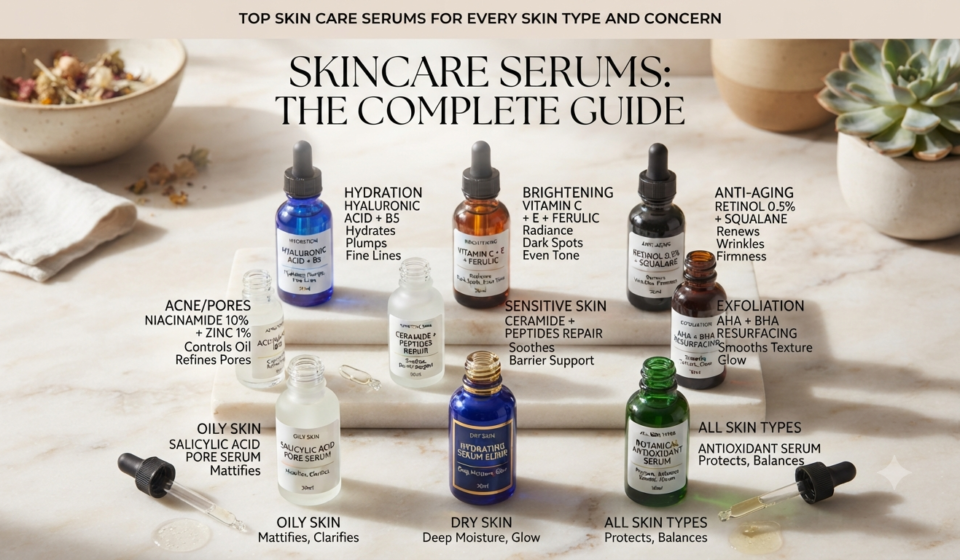
Skin concernIngredients to considerWhat to prioritize
DrynessHyaluronic acid, glycerin, panthenol, ceramidesHydration and barrier support
DullnessVitamin C, lactic acid, niacinamideGradual brightening
Oily skinNiacinamide, salicylic acidLightweight, non-comedogenic formulas
Fine linesRetinol, peptides, vitamin CConsistent use and sunscreen
Dark spotsVitamin C, niacinamide, retinoidsPatience and daily sun protection
Sensitive skinCeramides, panthenol, colloidal oatmealFragrance-free, simple formulas
Rough textureLactic acid, glycolic acid, retinolSlow introduction and moisturization

Avoid buying several treatment serums at the same time. Start with one product, use it consistently, and evaluate your skin after several weeks. Results vary according to the ingredient, concentration, skin condition, and frequency of use.

Common Serum Mistakes to Avoid

One of the most common mistakes is using too many active ingredients simultaneously. For example, combining retinol, glycolic acid, salicylic acid, and a strong vitamin C product may create irritation without producing faster results.

Other mistakes include:

  • Applying too much product.

  • Skipping moisturizer after a hydrating serum.

  • Neglecting sunscreen.

  • Using expired or discolored vitamin C.

  • Applying strong products to already irritated skin.

  • Expecting dramatic results within a few days.

  • Choosing a product solely because it is trending online.

Consumers should also be cautious about exaggerated claims. A cosmetic serum can improve the appearance of skin, but it cannot permanently erase wrinkles, replace medical acne treatment, or provide the same results as a professional procedure.

Final Buying Advice

For most U.S. consumers, a practical skincare routine begins with a gentle cleanser, one targeted serum, a moisturizer, and broad-spectrum sunscreen. Choose a hydrating serum if dryness is your primary concern, vitamin C or niacinamide for uneven tone, salicylic acid for clogged pores, and retinol for long-term texture and fine-line concerns.

Note: This article is for informational purposes and is not medical advice. People with eczema, psoriasis, diabetes or persistent skin irritation should consult a board-certified dermatologist.


Author

New York Fashion City Editorial Team

Follow Me
Other Articles
he Complete Guide to Modern Manicure Trends
Previous

The Complete Guide to Modern Manicure Trends: 2026 Nail trends

Top Skin Care Creams for Every Skin Type and Concern
Next

Top Skin Care Creams for Every Skin Type and Concern

No Comment! Be the first one.

Leave a Reply Cancel reply

Your email address will not be published. Required fields are marked *

Shopping

Jewelry        Moisturizers

Watches      Makeup

Shoes          Gel Cream

Eyewear    Luxury Shop

Search

Recent Posts

  • What to Wear in New York City: A Season-by-Season Guide
  • ALASTIN Skincare: A Deep-Dive Guide to Three Anti-Aging Serums
  • 15 Best Places to Stay in New York City for Couples
  • The Ultimate SoHo Guide: Shopping, Style, Cafés & Things to Do
  • Top Romantic Hotels in New York, NY for 2026

Find Us

Address
123 Main Street
New York, NY 10001

Hours
Monday–Friday: 9:00AM–5:00PM
Saturday & Sunday: 11:00AM–3:00PM

About This Site

Welcome to New York Fashion City—your ultimate digital runway and the heartbeat of style in the greatest city in the world. Amazon Associates Storefront

Recent Posts

  • What to Wear in New York City: A Season-by-Season Guide
  • ALASTIN Skincare: A Deep-Dive Guide to Three Anti-Aging Serums
  • 15 Best Places to Stay in New York City for Couples
  • The Ultimate SoHo Guide: Shopping, Style, Cafés & Things to Do
  • Top Romantic Hotels in New York, NY for 2026

Archives

  • October 2026 (9)
  • September 2026 (5)

Find Us

New York Fashion City
Online Fashion & Lifestyle Publication
New York City, USA

Privacy Policy | Cookie Policy | Terms & Conditions | Disclaimer | Affiliate Disclosure