Top Skin Care Creams for Every Skin Type and Concern

A good skin care cream does more than make the skin feel soft. The right formula helps reduce moisture loss, support the skin barrier, improve comfort, and create a smoother foundation for sunscreen and makeup. However, the best cream is not necessarily the most expensive or heavily marketed product. It is the one that matches your skin type, climate, concerns, and tolerance.
For U.S. consumers, the market includes rich creams for dry skin, lightweight gel creams for oily skin, fragrance-free formulas for sensitive skin, and multitasking products with ingredients such as ceramides, hyaluronic acid, niacinamide, glycerin, petrolatum, and colloidal oatmeal. This guide explains how these formulas work and how to choose the best skin care cream for your individual routine.
What Is a Skin Care Cream?
“Skin care cream” commonly refers to a moisturizer designed to hydrate the outer layer of the skin and reduce water loss. Moisturizers can include lotions, creams, gels, and ointments, with creams generally offering more richness than lotions or gels. The American Academy of Dermatology explains that moisturizers help add moisture to the skin while preventing moisture from leaving it.
Most effective moisturizers contain a combination of three types of ingredients:
Humectants, such as glycerin and hyaluronic acid, attract water to the skin.
Emollients, including fatty acids, squalane, and shea butter, soften and smooth rough areas.
Occlusives, such as petrolatum and dimethicone, form a protective layer that helps reduce water loss.
A lightweight lotion may be comfortable for oily or humid-weather skin, while a dense cream or ointment may be better for very dry or winter-damaged skin. The goal is not to choose the thickest product available. The goal is to use a formula that delivers adequate hydration without causing congestion, irritation, or an unpleasant finish.
Best Overall: A Barrier-Supporting Moisturizing Cream
For most people, the best overall skin care cream is a fragrance-free, non-comedogenic moisturizer containing ceramides, glycerin, hyaluronic acid, or niacinamide. These ingredients can support hydration while helping the skin maintain a healthier barrier.
Ceramides are waxy lipid molecules naturally found in the outer layer of the skin. They help support the barrier that protects against excessive water loss and environmental irritants. Hyaluronic acid and glycerin work mainly as humectants, helping the skin retain water. Dermatology resources frequently identify ceramides and hyaluronic acid as useful moisturizing ingredients.
CeraVe Moisturizing Cream is one widely recognized example in this category. Wirecutter lists it as a top choice for dry skin and describes it as a rich, scent-free cream that helps seal in moisture. Its popularity reflects an important principle: a dependable, fragrance-free formula can be more useful than a complicated product with numerous unnecessary extras.
A barrier-supporting cream is suitable for normal, dry, combination, and sensitive skin, although people with oily skin may prefer a lighter lotion or gel texture.
Best Cream for Dry Skin
Dry skin often feels tight, rough, flaky, or uncomfortable. It may become worse during winter, in low-humidity indoor environments, or after using hot water and harsh cleansers. For dry skin, dermatologists generally recommend thicker creams rather than lightweight lotions.
Look for ingredients such as:
Petrolatum.
Ceramides.
Shea butter.
Glycerin.
Squalane.
Dimethicone.
Hyaluronic acid.
Colloidal oatmeal.
Petrolatum is an effective occlusive ingredient that helps reduce water loss. Shea butter and squalane add emollient benefits, while glycerin and hyaluronic acid help attract water. Colloidal oatmeal may provide soothing benefits for dry or uncomfortable skin.
A rich cream is usually most effective when applied immediately after cleansing, while the skin is still slightly damp. This helps trap existing moisture. At night, people with very dry skin may apply a thicker layer to areas that become particularly rough, such as the cheeks, around the nose, or hands.
Avoid products with strong fragrance, drying alcohols, or high concentrations of exfoliating acids if your skin is already dry. The American Academy of Dermatology specifically advises people with dry skin to consider avoiding fragrance, alcohol, and alpha-hydroxy acids because they may worsen dryness or irritation
Best Cream for Sensitive Skin
Sensitive skin may react with burning, itching, redness, or stinging after using certain products. A suitable moisturizer should have a relatively simple formula and avoid unnecessary potential irritants.
Important features include:
Fragrance-free labeling.
A short, transparent ingredient list.
Barrier-supporting ingredients.
Non-comedogenic labeling when appropriate.
Soothing ingredients such as colloidal oatmeal or panthenol.
First Aid Beauty Ultra Repair Cream is one example often recommended for sensitive or dry skin because it contains colloidal oatmeal, a skin-protectant ingredient. CeraVe Moisturizing Cream and La Roche-Posay Toleriane formulas are also frequently included in expert and editorial recommendations for dry or sensitive skin.everydayhealth+1
Be cautious with products labeled “natural” or “organic.” Plant extracts and essential oils can still trigger irritation or allergy. The AAD notes that people with sensitive skin should be careful with certain organic skin care products because their ingredients may aggravate allergies.aad
Before using a new cream on the entire face, apply a small amount to an inconspicuous area for several days. Stop using it if you develop persistent burning, swelling, rash, or worsening redness.
Best Gel Cream for Oily and Combination Skin
Oily skin still needs moisturizer. Skipping hydration can leave the skin feeling uncomfortable and may encourage people to overuse harsh products that damage the barrier. The better approach is to choose a lightweight, non-comedogenic cream or gel moisturizer.
Gel creams are generally lighter than traditional creams and may be particularly comfortable for oily or combination skin. NBC Select describes gel moisturizers as a useful option for oily and combination skin because they are less likely to contribute to excess oil buildup.
Look for:
Water-based or gel textures.
Glycerin.
Hyaluronic acid.
Niacinamide.
Lightweight silicones.
Non-comedogenic labeling.
Avoid assuming that every oil is problematic. Some lightweight emollients may be comfortable for combination skin, but very rich formulas can feel greasy or contribute to clogged pores in some individuals. Skin response is personal, so texture and tolerance matter as much as the ingredient list.
A small amount applied after cleansing may be sufficient in the morning. If the skin becomes dry from acne treatment, a slightly richer product can be used at night.
Best Cream for Acne-Prone Skin
Acne-prone skin requires hydration without excessive heaviness. A moisturizer cannot treat every type of acne, but it can help reduce dryness and irritation caused by acne treatments such as benzoyl peroxide, salicylic acid, or topical retinoids.
Choose a moisturizer labeled non-comedogenic, meaning it is formulated to be less likely to block pores. The AAD recommends paying attention to this label, particularly for people whose skin is prone to breakouts.aad
Helpful ingredients may include:
Niacinamide.
Glycerin.
Ceramides.
Hyaluronic acid.
Dimethicone.
Lightweight squalane.
Avoid highly fragranced creams and products that leave a thick, occlusive film if you notice that they worsen breakouts. At the same time, do not use an aggressively drying moisturizer simply because your skin is oily. Excessive dryness can make an acne routine more difficult to tolerate.
If you use prescription acne medication, ask your dermatologist or healthcare professional which moisturizer best fits your treatment plan.
Best Anti-Aging Moisturizing Cream
A moisturizer cannot stop natural aging, but it can improve the appearance of dryness, rough texture, and fine lines caused partly by dehydration. For a more advanced anti-aging routine, look for creams containing peptides, niacinamide, ceramides, antioxidants, or retinoids.
Peptides are commonly used in products formulated to support the appearance of firmness. Niacinamide may help improve uneven tone and support the skin barrier. Retinol, a vitamin A derivative, is a more active ingredient used to address fine lines, uneven texture, and blemishes.
A retinol-containing cream should be introduced gradually, usually at night. Begin with a small amount once or twice weekly, then increase only if the skin remains comfortable. Dryness and peeling are common when starting retinol, so a plain moisturizer may be used before or after the retinol product.
Daily sunscreen remains the most important daytime step for preventing visible sun-related skin changes. A moisturizing cream with SPF may be convenient, but it should be applied generously and reapplied as directed. Consumers should distinguish ordinary cosmetic moisturizers from products specifically labeled and regulated as sunscreen products.
Best Cream for Mature Skin
Mature skin often becomes drier and more sensitive over time. The best cream should provide lasting hydration without excessive fragrance or irritating active ingredients.
Experts commonly recommend formulas containing:
Ceramides.
Shea butter.
Peptides.
Glycerin.
Hyaluronic acid.
Fatty acids.
Squalane.
NBC Select reports that the right moisturizer can help minimize water loss and support the skin barrier, while sensitive mature skin may benefit from calming ingredients and a shorter ingredient list.nbcnews
A rich night cream may be useful for dry mature skin, while a lighter cream can work better under makeup during the day. Products that combine a moisturizer with retinol or exfoliating ingredients should be introduced cautiously, particularly if the user already has a sensitive or compromised barrier.
Cream, Lotion, Gel, or Ointment?
Texture is one of the most important differences among moisturizers.
| Product type | Best suited for | Typical feel |
|---|---|---|
| Gel | Oily, combination, humid climates | Lightweight and fast-absorbing |
| Lotion | Normal, combination, mild dryness | Light to medium |
| Cream | Dry, mature, winter-affected skin | Rich and nourishing |
| Ointment | Very dry, cracked, or irritated areas | Thick and highly occlusive |
A person living in a hot, humid U.S. region may prefer a gel or lotion during the day. Someone in a cold, dry climate may need a cream, especially during winter. Even within the same household, people may prefer different textures based on their skin type and lifestyle.
How to Apply Skin Care Cream Correctly
Apply moisturizer after cleansing and after lighter treatment products such as serums. In the morning, finish with broad-spectrum sunscreen. Dermatologists cited by CNN recommend moisturizing twice daily, in the morning and at night.cnn
Use enough product to cover the face and neck comfortably, but avoid rubbing aggressively. Apply the cream with gentle, even strokes. If the skin is extremely dry, reapply to affected areas as needed.
Keep the container closed and store it according to the manufacturer’s instructions. Avoid dipping wet fingers into a jar repeatedly, and do not use a product that has changed dramatically in smell, color, or texture.
Common Mistakes to Avoid
Many moisturizer problems come from using the wrong texture or expecting one product to solve every concern. Common mistakes include:
Choosing a heavy cream for oily skin without testing it.
Avoiding moisturizer because the skin is acne-prone.
Using fragranced products on reactive skin.
Applying too little sunscreen.
Changing products every few days.
Using multiple exfoliating products on dry skin.
Assuming an expensive product is automatically more effective.
Ignoring persistent redness, itching, or scaling.
If a rash or irritation does not improve after stopping a product, consult a dermatologist. Persistent dryness may be related to eczema, psoriasis, rosacea, medication, or another medical condition rather than a simple lack of moisturizer.
Final Buying Guide
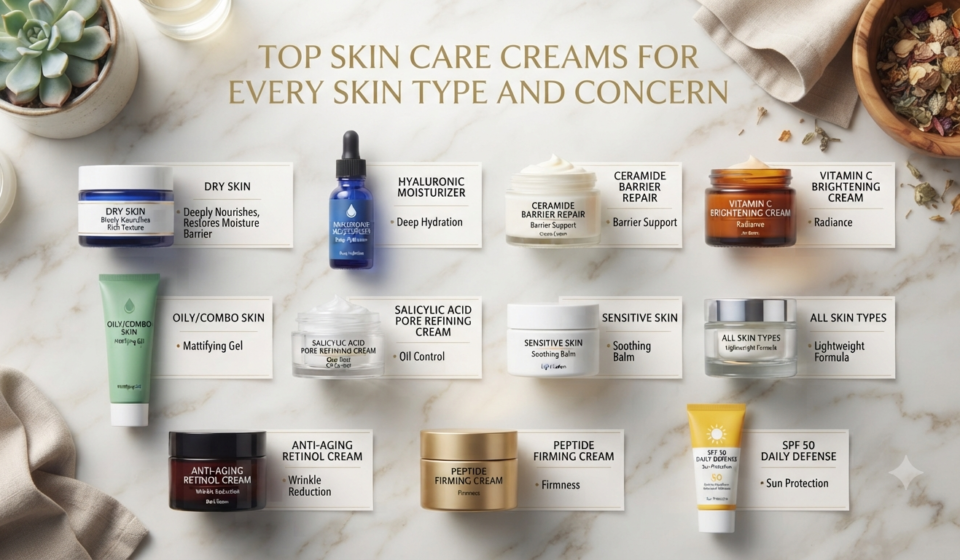
The best skin care cream depends on the user’s skin type and primary goal. For dry skin, choose a rich formula with ceramides, petrolatum, shea butter, glycerin, or squalane. For oily or combination skin, select a lightweight, non-comedogenic gel cream with humectants such as glycerin or hyaluronic acid. For sensitive skin, prioritize fragrance-free formulas with soothing and barrier-supporting ingredients.
A strong everyday choice is a simple moisturizer that feels comfortable enough to use consistently. Apply it after cleansing, use sunscreen in the morning, and introduce active ingredients slowly. With the right formula and regular use, a skin care cream can support a more comfortable, balanced, and healthier-looking complexion without requiring an unnecessarily complicated routine.